admin01@oshujian.com
What safety standards must airport luggage trolleys meet?
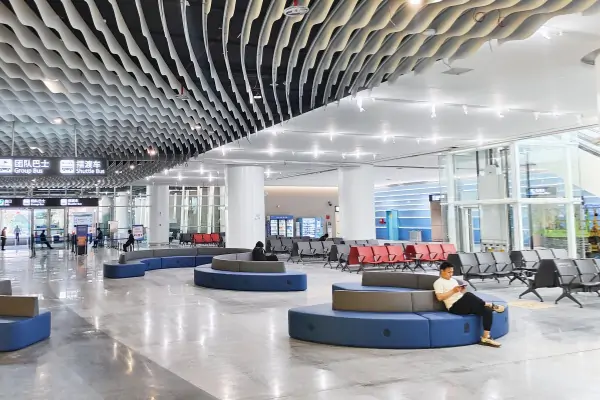
Airport luggage trolleys are among the first public facilities travelers encounter upon entering the terminal. Handling thousands of loads daily, their safety standards are directly linked to passenger safety and the orderly operation of the airport. A comprehensive safety standard system for these trolleys typically covers multiple aspects, including braking systems, load-bearing capacity, structural strength, material flame retardancy, and labeling specifications.
1. Braking System: The Key to Safe Parking on Slopes
The brake is the most critical safety feature of an airport luggage trolley. According to Civil Aviation Administration of China (CAAC) regulations, trolleys must be equipped with a braking system that can be operated by a single person from the handle end. A fully loaded trolley must remain stationary—without rolling forward or backward—when parked on an 11-degree slope surfaced with low-pile carpet. The International Air Transport Association (IATA) Airport Handling Manual (AHM) similarly requires luggage trolleys to feature automatic or speed-limiting braking systems. Some airports utilize a "dead-man" design where the trolley only moves when the handle is pressed; the brake engages automatically when the handle is released, effectively preventing accidental rolling on slopes or amidst crowds. Caster braking systems should ideally employ a "total lock" function that immobilizes both the wheel's rotation and its swivel mechanism, ensuring stability when parked.
2. Load-Bearing Capacity and Structural Strength: Visible Safety Fundamentals
Standard airport luggage trolleys typically have a load capacity of 300–500 kg. The load-bearing requirement for an individual caster is calculated as: (Total Load ÷ Number of Casters) + a 20% safety margin. For a 500 kg trolley, for instance, each caster must support at least 150 kg. Frames are usually constructed from cold-rolled steel plate or cast steel with a thickness of at least 3 mm to ensure no deformation under heavy loads. Testing protocols include static load strength tests (simulating structural capacity under full load), dynamic impact tests (evaluating shock resistance when wheels cross bumps or gaps), metal fatigue life assessments (evaluating structural durability over repeated use), and tilt stability tests (determining the critical angle for tipping prevention when parked on a slope).
3. Material Flame Retardancy and Corrosion Resistance: An Invisible Line of Defense
Airports are high-security public spaces; therefore, the non-metallic components of luggage trolleys must meet fire safety and flame retardancy requirements. When tested against relevant airworthiness standards, the trolleys must comply with specifications regarding flammability, heat release, and smoke density. Metal components must pass salt spray tests to verify their corrosion resistance, ensuring durability against daily cleaning agents and varying temperature and humidity conditions. Polyurethane (PU) is the preferred material for casters, offering a balance of wear resistance, quiet operation, and chemical corrosion resistance.
4. Ergonomics and Labeling Standards: Safety Lies in the Details
Handles should feature non-slip textures and ergonomic shapes to prevent user injury, with designs that eliminate pinch points. Folding mechanisms must incorporate anti-pinch safeguards. Trolleys should display prominent, clear labeling, usage instructions, and safety warnings. All weight-related signage must use kilograms. Trolley storage areas must not encroach upon tactile paving for the visually impaired or obstruct access to key areas such as emergency exits, fire shutters, elevators, and escalators.
5. Conclusion
For a compliant airport luggage trolley, every safety standard—from braking and load-bearing capacity to flame retardancy and pinch prevention—serves to protect both passengers and airport operations. The next time you push a luggage trolley through the terminal, remember that these invisible standards are quietly safeguarding the safe beginning of every journey.
Leave a message
Welcome you to leave your contact information and message, we will contact you by a personal person