admin01@oshujian.com
How Should Trash Bins Be Planned for Airport Terminals?
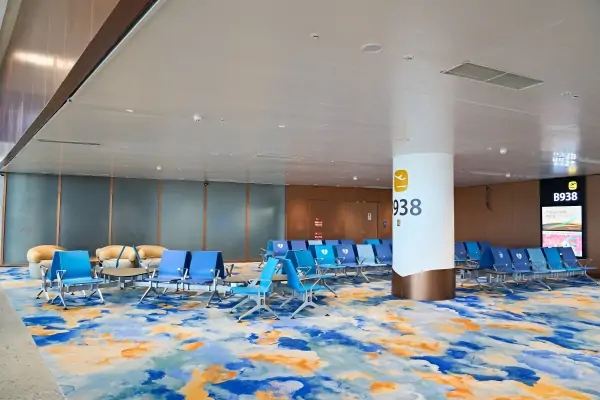
Planning trash bins for airport terminals involves far more than simply placing one every few meters. There are three core principles: guiding passengers toward proper waste sorting, harmonizing with the spatial aesthetic, and ensuring efficient collection and maintenance. A well-planned system enhances the passenger experience while significantly reducing cleaning and operational costs. The following four dimensions will help you get it right.
I. Categorizing Bins Based on Area Function
Different areas of the terminal have distinct needs. The check-in area in the departures hall sees high foot traffic and short dwell times; here, large-capacity stainless steel bins with openings designed for one-handed disposal are ideal. In the secure boarding area, where passengers spend time relaxing and shopping, it is recommended to install four-stream sorting bins (recyclables, general waste, food waste, and hazardous waste) paired with transparent acrylic signage to reinforce sorting guidance. In the arrivals baggage claim area, passengers are often in a hurry to leave; tall bins equipped with ashtrays are suitable, balancing practicality with fire safety regulations. Outdoor bins require wind-resistant, anchored bases and rain-deflecting channels to prevent waste from spilling out during inclement weather.
II. Scientifically Calculating Capacity and Spacing
Trash bin capacity should not be determined arbitrarily. Based on international terminal operational experience, the service radius for a single bin should be kept between 25 and 35 meters, and the collection cycle during peak hours should not exceed two hours. The calculation method involves taking the area's average daily waste generation (kg), dividing it by the bin's effective capacity (L), and multiplying the result by a peak-load factor of 1.5 to 2.0. For example, in domestic boarding areas, it is recommended to place two 120L sorting bins near each gate; conversely, in international arrivals halls—where duty-free shopping generates significant waste—bin capacity should be increased to 240L, with options for waste compaction.
III. Material and Craftsmanship Determine Durability
Airport trash bins endure heavy use and frequent cleaning and disinfection year-round, so material quality cannot be compromised. Stainless steel trash cans should be made of 304 or 316 food-grade stainless steel with a thickness of at least 1.2 mm; surfaces should feature a brushed or sandblasted finish to resist scratching. Inner liners are recommended to be made of galvanized steel or fiberglass (FRP) for corrosion resistance and ease of removal and cleaning. The edges of disposal openings in public areas must be rounded or beveled to prevent injury, and lids should utilize hydraulic soft-close hinges to avoid pinching hazards. Outdoor models require additional UV-resistant powder coating and a warranty period of no less than five years.
IV. Smart Upgrades and Ease of Maintenance
Modern airport trash cans have evolved from simple "containers" into "data terminals." It is recommended to integrate fill-level sensors and smoke detectors into units located in main corridors; real-time data transmission to the cleaning dispatch center enables on-demand emptying rather than relying on scheduled inspections. Furthermore, the availability of modular components from the manufacturer—allowing for the independent replacement of lids, liners, or signage panels—directly impacts long-term maintenance costs. Procurement specifications should require manufacturers to provide 3D placement simulations and foot-traffic heat map analyses to ensure every disposal point is data-validated.
Conclusion: Airport trash can planning requires a holistic approach addressing four key dimensions: area functionality, capacity calculation, material and craftsmanship, and smart maintenance. An excellent airport trash can system transforms passenger behavior from casual disposal to willing sorting, and elevates cleaning operations from reactive tidying to proactive management.
Leave a message
Welcome you to leave your contact information and message, we will contact you by a personal person