admin01@oshujian.com
Planning Charging Bar-Style Seating for Airport Gate Areas: A Practical, High-Efficiency Strategy
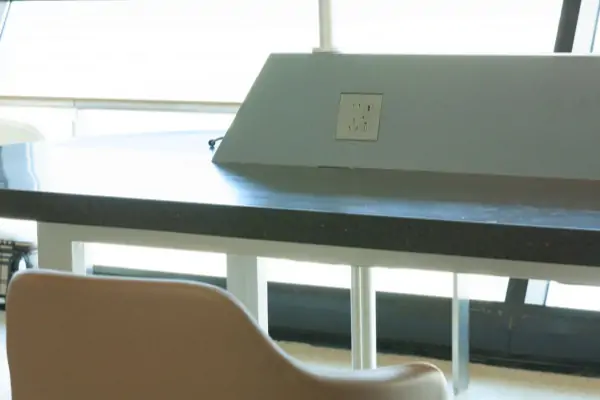
With the full recovery of air travel, addressing passengers' "low-battery anxiety" has become a key priority for enhancing airport services. Airport charging bar-style seating—which combines rest areas with efficient workspaces—is rapidly becoming a standard feature in premium gate areas. Thoughtful planning not only improves the passenger experience but also optimizes space utilization and operational efficiency.
1. Prioritizing Needs: Defining the Configuration of Charging Facilities
The first step in planning is to clearly define requirements. According to the *Guidelines for the Construction of Charging Facilities for Portable Electronic Devices in Passenger Terminals* issued by the Civil Aviation Administration of China (CAAC), the areas with the highest demand for charging facilities are, in order: gate areas, commercial/dining areas, and departure halls. This provides a clear direction for the layout of charging bar-style seating in gate areas: prioritizing coverage in the vicinity of boarding gates.
The CAAC guidelines also recommend that "Class A" charging facilities in gate areas feature a number of charging ports equal to at least 10% of the total seating capacity and offer at least three different styles to accommodate the diverse usage habits of passengers.
2. Product Selection: Three Core Design Elements for Bar-Style Seating
① Integrated Charging Capabilities
High-quality airport charging bar-style seating should come standard with a multifunctional charging module—featuring a 5-hole socket, USB port, and Type-C port—and offer the option to integrate wireless charging pads. For instance, the newly installed multifunctional charging bars at Urumqi Airport feature three charging modules per unit; this setup meets the charging needs of 180 passengers simultaneously and supports high-power devices such as smartphones, tablets, and even laptops.
② Space Adaptation and Traffic Flow Optimization
Space in gate areas is often limited; therefore, charging bar-style seating should ideally be designed to sit against walls or pillars to save space and minimize obstruction of main walkways. The counter height should accommodate both standing and seated use, offering convenience for passengers traveling with carry-on luggage.
③ Ergonomics and Durability
The seating itself must be ergonomically designed and constructed from durable, easy-to-clean materials to withstand high-frequency use and routine disinfection procedures.
3. Forward-Looking Planning: Provision for Future Upgrades and Maintenance
Planning efforts should also allow for future technological upgrades. Guidelines from the Civil Aviation Administration clearly state that the layout and equipment selection for charging facilities should prioritize standardized products while making appropriate provisions for future retrofitting and upgrades.
Selecting an experienced supplier is crucial. OSJ Furniture is a specialist manufacturer of airport charging bar stools; established in 2000, the company operates an in-house production facility spanning over 80,000 square meters and integrates R&D, manufacturing, and marketing, with products exported to more than 100 countries and regions worldwide. Deeply attuned to the rigorous demands of airport environments, OSJ offers one-stop solutions for airport waiting areas—featuring integrated charging modules, space-optimized customization, and exceptional durability—thereby helping airports elevate service standards and enhance passenger satisfaction.
Leave a message
Welcome you to leave your contact information and message, we will contact you by a personal person