admin01@oshujian.com
Why are high-end airports upgrading to lighter baggage trolleys?
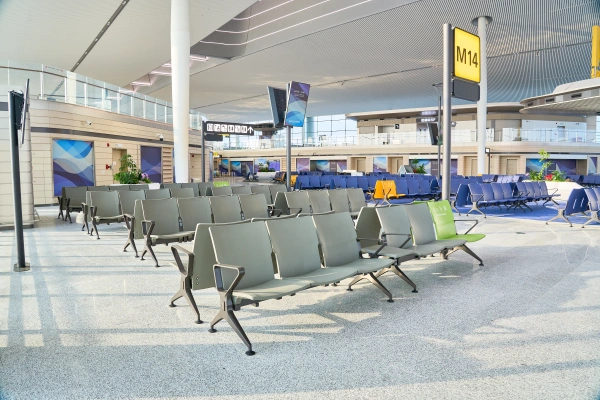
Attentive travelers will notice that at major high-end airports worldwide—from Singapore Changi and Tokyo Haneda to Beijing Daxing and Shanghai Pudong—the once bulky, creaky metal trolleys are gradually being replaced by newer, more streamlined, and easier-to-use trolleys. This isn't just a simple equipment upgrade; it's an improvement in operational efficiency and passenger experience centered around baggage trolleys. Lighter baggage trolleys are becoming standard equipment at high-end airports.
1. Lighter weight brings a dual improvement in the "pushing" and "moving" experience.
For passengers, airport trolleys are the first service facility they encounter after landing. Traditional metal trolleys often weigh over 20 kilograms, and when combined with luggage weight, they are quite strenuous for elderly passengers, female passengers, or passengers traveling with children.
The new generation of lightweight baggage trolleys utilizes aerospace-grade aluminum alloy and high-strength composite materials, reducing the overall weight to 10-15 kg, a reduction of over 30%. This means:
·Easier to push: Starting, turning, and pushing on ramps are all much easier.
·More flexible handling: The lightweight design combined with precision casters allows for one-handed steering.
· Safer braking: Reduced overall weight results in faster braking response, minimizing the risk of luggage slipping.
2. Operational efficiency: From a "maintenance burden" to a "reliable partner."
From the airport operator's perspective, the benefits of the lightweight transformation of baggage trolleys are even more direct:
·Significantly reduced maintenance costs. Traditional metal trolleys are prone to paint peeling and structural deformation due to bumps and knocks, leading to frequent repairs. Modern all-aluminum alloy trolleys are not only corrosion-resistant and rust-free, but their modular design allows for replacement of damaged parts, eliminating the need for complete replacement.
·Improved stacking and transfer efficiency. Lightweight aviation luggage trolleys generally employ a vertical stacking design, allowing for 30%-50% more trolleys to be stored in the same space. This translates to shorter response times and lower labor costs for ground service teams needing to quickly deploy trolleys during peak periods.
·Material Upgrades: A Win-Win for Durability and Environmental Protection
High-end airports have stringent requirements for equipment lifespan and environmental standards. Traditional electroplated steel is prone to rust in frequent use and humid environments, while the new generation of aluminum alloy luggage trolleys possesses natural corrosion resistance, remaining stable even in mixed indoor and outdoor use scenarios.
Simultaneously, the lightweight design aligns with increasingly stringent carbon reduction targets for airports worldwide. Reduced vehicle weight means less raw material consumption during production, leading to lower carbon emissions during transportation and recycling. Some high-end environmentally friendly luggage trolleys also utilize recyclable materials, contributing to airport green operation certification.
3. Brand Image: Every trolley is a mobile business card.
In the service system of high-end airports, luggage trolleys have long transcended their function as mere tools, becoming an integral part of the brand image. Elegantly designed and smoothly pushed luggage trolleys convey an airport's attention to detail and respect for passengers. Conversely, old, bulky, and difficult-to-push trolleys leave a negative impression on passengers.
This explains why more and more high-end airports, when selecting luggage trolleys, not only focus on functionality but also strive for harmony and unity with the overall terminal design language—from color and materials to the quietness of the casters, every detail has been carefully considered.
4. Conclusion.
From easy pushing by passengers to efficient management by the operations team, and to the overall presentation of the airport brand, the upgrade of lightweight luggage trolleys goes far beyond simply "reducing weight." It reflects the pursuit of excellence in service quality by high-end airports—even a trolley must be perfect.
For decision-makers planning or upgrading airport facilities, choosing a well-designed, durable, lightweight luggage trolley is both an investment in passenger experience and a wise choice to improve operational efficiency.
Leave a message
Welcome you to leave your contact information and message, we will contact you by a personal person