admin01@oshujian.com
How to reduce the maintenance costs of airport waiting chairs?
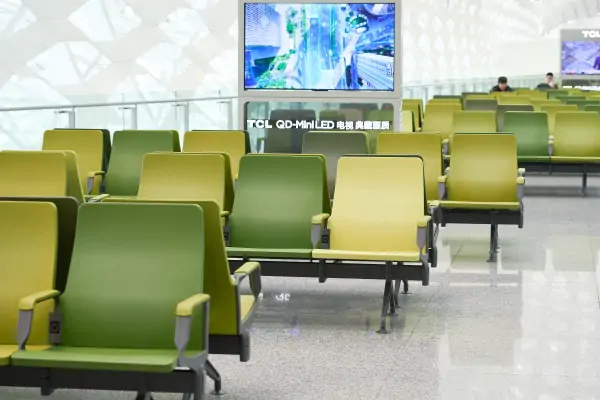
The key to reducing airport waiting chair maintenance costs is not "fewer repairs," but rather locking in maintenance frequency and labor costs during the product selection phase. The bulk of airport waiting chair maintenance costs is never the parts themselves, but rather the labor involved in repeated cleaning, troubleshooting loose or noisy surfaces, and the collateral damage of "one problem causing the entire row to be unusable."
Materials and structure determine the maintenance baseline.
In high-frequency contact scenarios, commercial-grade PVC/vinyl or flame-retardant PU synthetic leather should be prioritized for the seat surface. Non-porous surfaces can withstand frequent disinfection and wiping, with an abrasion resistance of 60,000-100,000 cycles or more. Coastal airports should avoid ordinary stainless steel; aluminum alloy structures with anti-oxidation treatment are more resistant to salt spray corrosion. Structurally, modular waiting chairs are recommended: if a single seat is damaged, only the seat panel or backrest needs to be replaced, not the entire row; hidden screw designs reduce loosening and detachment from the source, reducing the frequency of subsequent tightening and replacement.
Maintaining a consistent maintenance schedule is more cost-effective than increasing maintenance intensity.
Routine inspections consist only of visual checks and surface wiping; fasteners and charging modules are checked weekly; deep cleaning of upholstery is performed quarterly; and a comprehensive structural fatigue assessment is conducted annually. Cleaning staff adhere to a "touch and report" system—pressing seams and seats, immediately marking any looseness or unusual noises to prevent minor issues from escalating into major repairs. Industry practice shows that this habit can reduce annual major repair needs by approximately 37%.
Refurbishment and reuse are easily overlooked cost-reduction levers.
For old chairs with intact frames, the cost per seat for refurbishment and leather replacement at airports is significantly lower than purchasing a new chair. Using actual data from a certain airport as a reference: refurbishing a single seat costs approximately 200 yuan, while purchasing the same model new costs approximately 1400 yuan, resulting in a saving of 1200 yuan per seat. Differentiating between "replacing high-frequency areas and refurbishing low-frequency areas" can significantly reduce capital expenditure and subsequent maintenance pressure without sacrificing user experience.
Ultimately, low-cost maintenance of airport waiting chairs is a matter of total lifecycle cost: the purchase price is just the numerator, while cleaning hours, maintenance frequency, and replacement cycle are the denominators. By selecting the right chairs, setting the right pace, and making full use of refurbishment, maintenance costs will naturally remain within a controllable range.
Leave a message
Welcome you to leave your contact information and message, we will contact you by a personal person