admin01@oshujian.com
How do you select the right leisure seating for different areas of an airport terminal?
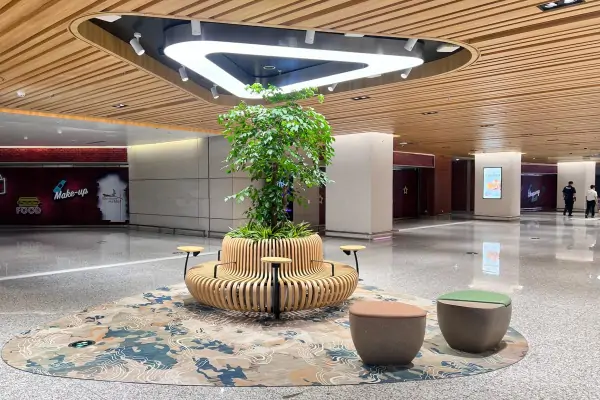
There is no "one-size-fits-all" seating solution for an entire airport terminal. Passengers at boarding gates need quick access to a seat and a way to charge their devices; those in transit areas require options for reclining or lying down; arrival/meet-and-greet zones demand flexibility and clear pathways; while nursing rooms and VIP lounges have their own specific ergonomic and experiential standards. Choosing the wrong type of seating for a given area often leads to either rapid wear and tear from heavy use or, conversely, a complete lack of interest from passengers. Tailoring the chair type, spacing, and functionality to each specific zone is the most pragmatic starting point for selecting airport leisure seating.
Boarding Gate Waiting Areas: Prioritize row seating, adequate spacing, and charging capabilities. As these are short-term waiting zones, the focus should be on row-style seating or standard airport chairs with armrests—there is no need to over-emphasize a "sofa-like" feel. In general areas, lateral spacing between seats should be kept between 1.1 and 1.4 meters, with at least 1.5 meters left for main thoroughfares to ensure that luggage and two-way pedestrian traffic do not become obstructed. In terms of functionality, the most valuable additions are USB-A, USB-C, or wireless charging ports integrated into armrests or between seats; for passengers, the ability to charge their devices immediately upon sitting down is far more practical than having a backrest that reclines an extra degree or two.
Transit and Long-term Waiting Areas: Opt for recliners or high-back lounge chairs, where comfort is defined by the ability to remain seated for extended periods. Transit passengers may wait for hours—or even overnight—so seating should be upgraded to recliners or high-back chairs with armrests, offering ample support through generous seat depth and well-angled backrests. In these zones, chairs can be complemented by footrests and small side tables. Materials should ideally be flame-retardant synthetic leather or molded polyurethane, which can withstand frequent disinfection and wiping without cracking. While spacing does not need to be as tight as at boarding gates, it is essential to account for turning space for wheelchairs and seating for companions.
Arrival and Meet-and-Greet Zones: Prioritize lightweight, flexible furniture, ensuring a sufficient quantity to accommodate the volume of arriving passengers. The core challenge in the arrivals/meet-and-greet area is that people waiting for arriving passengers face long wait times but occupy seats for relatively short periods. Seating here should consist of lightweight, casual chairs or single-seat sofas—avoiding complex features—to facilitate easy cleaning and relocation. The number of seats provided should accommodate at least 5% of the passenger volume arriving during peak hours, while ensuring that the placement does not obstruct the flow of people or luggage.
For nursing rooms and VIP lounges, standard, generic seating is insufficient. Nursing areas must be equipped with specialized nursing chairs; conventional single-seat sofas are ergonomically unsuitable for nursing mothers and pregnant women, as they often fail to provide the necessary lumbar/back support or the correct armrest height. VIP lounges, meanwhile, are best served by modular lounge chairs or high-backed sofas, which allow for flexible configurations that create a sense of privacy and relaxation within a limited footprint—with materials and craftsmanship standards that exceed those of general public waiting areas.
Selecting terminal seating based on specific zones acknowledges that different travelers have distinct needs when it comes to "sitting" within an airport terminal. At boarding gates, the focus is on spacing and access to charging ports; in transit zones, it is on comfort and durability; in arrivals/meet-and-greet areas, it is on capacity and flexibility; and in nursing rooms and VIP lounges, it is on specialized, ergonomic suitability. By establishing a clear baseline for each of these four scenarios, airport seating can be effectively and appropriately deployed.
Leave a message
Welcome you to leave your contact information and message, we will contact you by a personal person