admin01@oshujian.com
What kind of airport lounge seating is best suited for extended use?
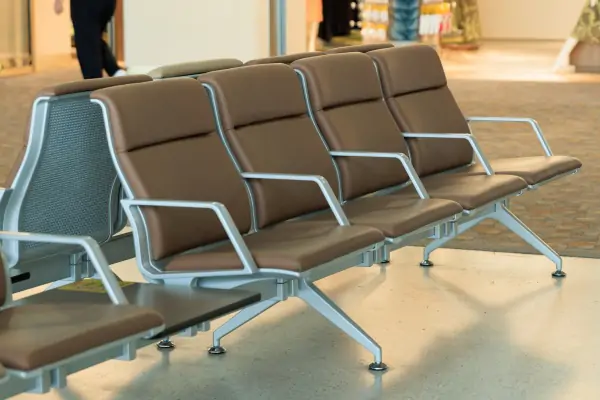
For airport lounge seating intended for long-term use, the priority is not a "premium" appearance, but rather a combination of ergonomic support, adjustability, convenient access to power, durability, ease of cleaning, and maintainability. Focusing solely on aesthetics can lead to passenger discomfort—causing frequent seat-swapping—which ultimately hinders seat turnover and degrades the overall passenger experience.
1. Ergonomic support is the key to comfort during long waits.
Seating for extended stays should feature an optimal backrest angle, proper lumbar and back support, and an appropriate seat depth. Sofas in airport lounges should not be overly soft, as this makes it difficult for passengers to stand up. High-backed lounge chairs provide essential head and neck support, making them ideal for long-haul layovers or overnight waits. When selecting furniture, consider the resilience of the seat cushions and the support provided at the edges to prevent the seat from sagging over time.
2. Adjustable armrests and ample legroom enhance adaptability.
Lounge seating should offer adjustable or removable armrests to accommodate various activities, such as using a laptop, dining, or facilitating transfers for passengers in wheelchairs. For row-style seating, sufficient space must be provided for passengers to stand up and move around; modular configurations allow for layout adjustments based on passenger traffic.
3. Integrated charging and storage are essential for long-term stays.
Lounge seating should incorporate power outlets, USB charging ports, and cup holders or storage surfaces, minimizing the need for passengers to leave their seats in search of a power source. Charging modules should be independently serviceable or replaceable, ensuring that a minor electrical fault doesn't render an entire seating unit unusable.
4. Materials should be easy to clean, and the structure should be repairable.
For high-traffic areas, prioritize wear-resistant, stain-resistant, or easily disinfected materials. Components such as seat cushions, armrests, and backrests should be individually replaceable. When procuring furniture, ensure the long-term availability of spare parts to keep maintenance costs low.
5. Balancing privacy with clear sightlines.
Use high-backed chairs, partitions, or greenery to delineate waiting areas, creating relatively quiet zones for extended stays without obstructing emergency evacuation routes.
In summary, airport lounge seating designed for long-term use should offer: proper ergonomic support, high adjustability, convenient charging options, ease of cleaning and repair, and a well-organized, zoned layout. Incorporating these five criteria into the selection process for airport lounge seating will enhance the experience for passengers during extended periods of sitting and improve the efficiency of space utilization.
Leave a message
Welcome you to leave your contact information and message, we will contact you by a personal person