admin01@oshujian.com
How should leisure seating be planned for airport terminals?
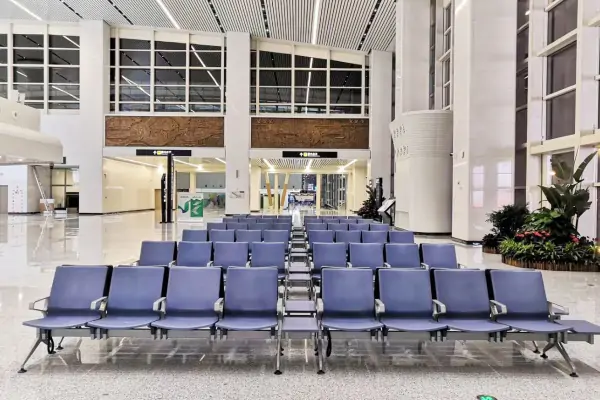
Planning leisure seating for airport terminals centers on five key aspects: zoning and type selection, quantity based on passenger flow, material durability and ease of cleaning, comfort and functionality, and safety and maintenance. Proper selection of airport leisure seating is essential for enhancing the passenger waiting experience and improving operational efficiency.
1. Determine types based on zones.
Boarding gates are suitable for linked airport seating or standard waiting chairs; transit areas should feature recliners or lounge chairs; and VIP lounges call for high-end leisure chairs. Public seating plans must distinguish between short-term waiting and long-term resting needs, aligning seating choices with various passenger circulation paths.
2. Determine quantity and row spacing based on passenger flow.
Estimates should be based on peak-hour passenger volume. Main aisles require a width of at least 1.5 meters, and row spacing must allow for adequate legroom. Seat dimensions and armrest widths impact both comfort and traffic flow; accessible areas should include companion seating. Custom seating projects should begin with a layout plan.
3. Prioritize durable, easy-to-clean materials to reduce maintenance.
Given high passenger traffic, priority should be given to stainless steel, aluminum alloy, flame-retardant plastics, and easy-to-clean PU materials. Public seating must be resistant to wear and tear as well as frequent disinfection. Manufacturers should provide test reports and product warranties.
4. Balance comfort and functionality.
Airport leisure chairs can be equipped with features such as USB charging ports, wireless charging pads, small side tables, and cup holders. Specific types—such as charging chairs, recliners, or massage chairs—should be deployed according to the specific setting. Design considerations for leisure chairs must include backrest angles, seat depth, and support for prolonged sitting.
5. Ensure safety and ease of maintenance.
Designs must feature rounded corners, flame-retardant and anti-slip properties, and load-bearing capacities that meet safety standards and fire evacuation requirements. When sourcing or customizing airport seating, clients should review samples and past projects, and ensure that suppliers guarantee the availability of spare parts.
Summary: Planning airport terminal leisure seating involves zoning, determining quantities, selecting materials, adding functional features, and ensuring safety. Decisions regarding the selection of leisure chairs, terminal seating, and lounge seating should always prioritize the passenger experience and long-term operational maintenance.
Leave a message
Welcome you to leave your contact information and message, we will contact you by a personal person