admin01@oshujian.com
Fire Resistance and Structural Stability of Airport Waiting Seats: Stringent Tests They Must Pass.
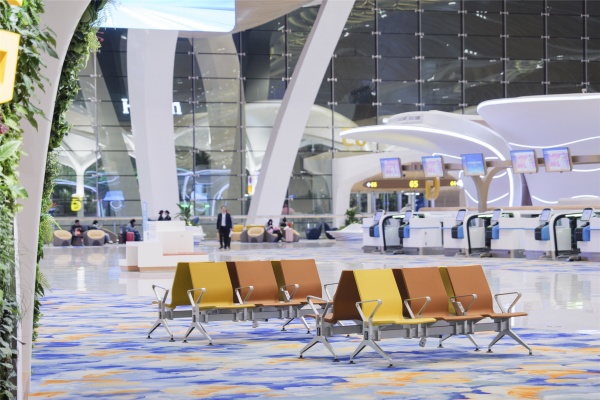
In modern airport construction, airport waiting seats are not only rest facilities for passengers waiting for their flights, but also a crucial element in ensuring a safe and comfortable experience. Their fire resistance and structural stability directly affect passenger safety and the overall service evaluation of the airport. This article will analyze the key tests that airport waiting seats must pass, providing managers with a more informed decision-making process during procurement and selection.
1. Fire Resistance and Structural Stability Testing: Ensuring Passenger Safety
Airport waiting seats are public facilities and must meet stringent fire safety standards. Core test items include:
Flammability Test: Simulates contact with a fire source to test whether the seat materials are flammable, ensuring that the spread of fire is slowed in the event of a sudden fire.
Smoke Density Test: Assesses the smoke concentration produced when the seat burns, reducing the respiratory threat of smoke to passengers.
Dripping Test: Checks whether burning drips are produced during combustion, preventing the spread of flames.
High-quality airport waiting seats with fire-retardant designs not only meet national standards but also enhance the airport's safety reputation and increase passenger trust.
2. Structural Stability Testing: Ensuring Long-Term Durability
Besides fire resistance, the structural stability of airport waiting seats is crucial for long-term use and high-traffic environments. Common tests include:
Static Load Test: Simulates the weight of an adult sitting continuously to verify the seat's load-bearing capacity.
Fatigue Test: Repeatedly applies pressure and vibration to check the stability of the seat frame and welded points.
Tilt & Lateral Force Test: Ensures the seat is not easily tipped over during passenger movement or crowding, improving safety.
Through these tests, high-quality airport waiting seats maintain their stability and durability over the long term, reducing maintenance costs while improving passenger comfort and airport service evaluation.
3. Other Key Quality Requirements
Surface Material Safety: Avoid sharp edges or easily scratched surfaces to improve passenger experience.
Easy-to-Clean and Stain-Resistant Treatment: Adapts to high-traffic environments, ensuring a clean waiting area.
Modular design: Facilitates maintenance and replacement, extending seat lifespan.
By comprehensively considering fire resistance, structure, and materials, airport waiting chairs not only ensure safety but also enhance the overall service evaluation of the airport.
4. Conclusion
In airport construction and operation, the fire resistance and structural stability of airport waiting chairs are crucial indicators that cannot be ignored. Through rigorous combustion, structural, and durability testing, airports can provide passengers with a safe, comfortable, and reliable waiting environment, while improving their overall service reputation. Choosing high-quality airport waiting chairs that have undergone stringent testing is an essential choice for every airport to ensure safety and improve the experience.
Leave a message
Welcome you to leave your contact information and message, we will contact you by a personal person