admin01@oshujian.com
The Secret to Efficient Airport Operations: Choosing the Right Trash Cans Saves 30% on Cleaning Costs Annually!
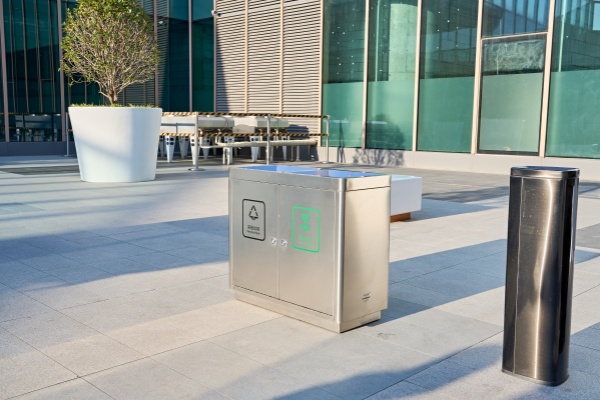
In airport operations, there's a detail often overlooked but significantly impacting costs and passenger experience – trash cans. They not only concern environmental cleanliness but are directly related to cleaning staff allocation, equipment wear and tear, and passenger satisfaction. Choosing the wrong trash cans can invisibly increase your cleaning costs by more than 40%.
1. Why does the selection of airport dustbin cans affect cleaning costs?
airport dustbin cans are the "first line of defense" in the airport cleaning system. Improper selection can lead to:
• Frequent overflowing of trash, increasing the frequency of cleaning staff patrols
• High trash can damage rate, leading to increased procurement costs due to frequent replacements
• Unstable bottom structure, easily tipping over and causing secondary cleaning costs
• Difficulty controlling internal odors, affecting the waiting area environment and passenger satisfaction
Therefore, when purchasing airport dustbin cans, it's not just about "price comparison," but also considering durability, structural design, ease of maintenance, safety standards, and overall layout from multiple dimensions.
2. Durability is the core of reducing cleaning costs
Durability is a fundamental requirement for airport dustbin cans. A durable trash can should possess:
High-quality materials and structural design
Common materials for airport dustbin cans include:
• Stainless steel: Corrosion-resistant, easy to clean, suitable for high-traffic areas
• Engineering plastics (HDPE/PP): Impact-resistant, lightweight, and moderately priced
• Coated steel plate: Combining sturdiness and appearance
Reinforced design in frequently contacted areas (openings, edges) can reduce wear and tear, lowering maintenance needs from the source. 3. Reasonable Capacity and Partition Design Reduce Cleaning Frequency
When selecting waste bins, the capacity and partition type should be determined based on airport passenger flow and area characteristics:
Single-opening vs. Multi-compartment Waste Bins
With the advancement of waste sorting policies, airports are increasingly adopting multi-compartment waste bins (recyclable, organic waste, non-recyclable, etc.), which can:
Facilitate quick disposal by passengers
Reduce secondary sorting and cleaning caused by incorrect disposal
Improve overall cleaning efficiency
At the same time, different areas require different capacity specifications for airport waste bins:
• Boarding gates/waiting areas: Large capacity, multi-compartment waste bins
• Commercial streets/dining areas: More emphasis on leak-proof and odor-proof design
• Entrances/passageways: Compact and easy-to-move waste bins
Reasonable matching of capacity and partitions can reduce the frequency of cleaning staff patrols and waste removal, thereby reducing labor and time costs.
4. Odor and Leak Prevention are Essential Details for Airport Waste Bins
Airports have high passenger traffic. If waste bins cannot effectively control odors and leaks, it will:
Increase the cleaning area for cleaning staff
Affect the overall environmental experience in the waiting area
Aggravate odor diffusion in hot weather
When choosing waste bins, attention should be paid to:
• Built-in odor-proof lids
• Ability to install garbage bag fixing devices
• Leak-proof bottom structure and easy-to-clean design
These designs may seem minor, but they play a significant role in reducing cleaning costs and improving the passenger experience in long-term airport operations.
5. Airport Waste Bin Selection Recommendation Checklist (Procurement Reference)
To facilitate quick selection by airport facilities departments, here is a selection checklist:
• Material: Preferably stainless steel + high-strength engineering plastic
• Classification: At least three sorting openings (recyclable/non-recyclable/hazardous waste)
• Capacity: Different capacity specifications according to area planning
• Design: Odor-proof, leak-proof, easy-to-open lid, easy-to-remove bag
• Safety: Rounded corners, stable base to reduce collision hazards
• Maintenance: Quick disassembly for cleaning and replacement of parts
These points constitute the "durability and low cost" standard system for airport waste bins, which is an important cornerstone for airports to improve cleaning efficiency and operational quality.
Leave a message
Welcome you to leave your contact information and message, we will contact you by a personal person